

About Us
Ensuring better health outcomes for all was the genesis of the Sandstone story. It is why building relationships with our patients and across our team is so important. We know better health starts with better relationships.
Sandstone Healthcare
We’re named Sandstone Healthcare for a reason.
Sandstone forms when individual grains join to become something stronger together. That’s how we think about healthcare too.

We opened in Inala in 2007 and we’re now expanding across Brisbane.
At every Sandstone practice, you’ll find doctors who have time to listen, allied health professionals who already know your story, and a care team that coordinates around you—not the other way around. Nobody’s chasing five different clinics trying to piece together your care. Your GP appointment gives you the time you need too.
We’re a nonprofit, which means every dollar goes back into patient care, not dividends. We work with universities to research better ways of delivering healthcare, then we use what we learn to advocate for policy changes that benefit everyone, regardless of postcode.
Health for good!
Our Story
It’s true. We’re passionate about good health.
This means our whole team of doctors, nurses, allied health, specialists, working together for you, giving you the time that the best care needs.
We’re gaining your trust, sharing notes, and using our combined specialties to offer new, improved models of care.

Our passion shows up as partnership, too. Partnership with you, because you know your own life best. And with each other, because great healthcare isn’t a solo act.
We think it’s exactly what health care should be.


Our Journey So Far
Our journey began in 2005 with a rescue mission — and miraculously, it led here. This is what nearly two decades of never giving up on better ways to care, looks like.
Notably, that beacon clinic helped Inala win RACGP General Practice of the Year in 2009. In 2018 the Productivity Commission recommended the model spread nationally to save the country over $300M. Not bad for local innovation which just keeps working.

Yeerongpilly, we’ve arrived! Sandstone opened its second location at Yeerongpilly. The new practice serves a different community with the same commitment to team-based care, longer appointments, and proactive health management. It was created to contribute to the financial stability of our non-profit mission and creates space to progress new models and patient care. Two locations to strengthen the whole.
Yeerongpilly, we’ve arrived! Sandstone opened its second location at Yeerongpilly. The new practice serves a different community with the same commitment to team-based care, longer appointments, and proactive health management. It was created to contribute to the financial stability of our non-profit mission and creates space to progress new models and patient care. Two locations to strengthen the whole.
Sandstone serves more older patients than almost any other general practice in its region — more than 40 per cent more patients who are over 75. With funding first from Brisbane South PHN and later Queensland Health, the team led research reviewing over 48,000 studies to design a Life Course Model of Care for adults aged 45 and over. Evidence shows that planned, proactive care can extend healthy living by at least five years. The Centre’s work reframes ageing as a stage to prepare for, not endure. Now presented at national conferences, the model continues to influence thinking on prevention, screening and lifelong wellbeing.
Sandstone serves more older patients than almost any other general practice in its region — more than 40 per cent more patients who are over 75. With funding first from Brisbane South PHN and later Queensland Health, the team led research reviewing over 48,000 studies to design a Life Course Model of Care for adults aged 45 and over. Evidence shows that planned, proactive care can extend healthy living by at least five years. The Centre’s work reframes ageing as a stage to prepare for, not endure. Now presented at national conferences, the model continues to influence thinking on prevention, screening and lifelong wellbeing.
In 2024, Sandstone received a national Stronger Medicare Award from the Prime Minister, recognising innovative care for multicultural and marginalised patients. Fewer than a dozen practices across Australia received this distinction. It acknowledged that equity-focused care is both good medicine and good policy. For Sandstone’s founding leaders, the award symbolised national validation of an approach built quietly over decades — team-based, inclusive and focused on those most often left behind.
In 2024, Sandstone received a national Stronger Medicare Award from the Prime Minister, recognising innovative care for multicultural and marginalised patients. Fewer than a dozen practices across Australia received this distinction. It acknowledged that equity-focused care is both good medicine and good policy. For Sandstone’s founding leaders, the award symbolised national validation of an approach built quietly over decades — team-based, inclusive and focused on those most often left behind.
In 2023, Sandstone joined six other Brisbane practices to form the Health Equity Coalition — a network advocating for fair funding for clinics serving disadvantaged communities. Together they produced a policy paper showing that caring for those with complex needs takes longer and costs more, yet is reimbursed less. Their work led to small government grants to test new funding and service models. The coalition makes visible what equity in healthcare truly costs. In 2024, the CEO co-authored Getting Australia’s Health on Track for the Commonwealth Department of Health, strengthening the national case for sustainable primary care in low-income areas.
In 2023, Sandstone joined six other Brisbane practices to form the Health Equity Coalition — a network advocating for fair funding for clinics serving disadvantaged communities. Together they produced a policy paper showing that caring for those with complex needs takes longer and costs more, yet is reimbursed less. Their work led to small government grants to test new funding and service models. The coalition makes visible what equity in healthcare truly costs. In 2024, the CEO co-authored Getting Australia’s Health on Track for the Commonwealth Department of Health, strengthening the national case for sustainable primary care in low-income areas.
In 2022, Sandstone began influencing national policy, contributing directly to reform through presentations to the Strengthening Medicare Taskforce. Next came an appointment to the Expert Advisory Panel reviewing incentive and after-hours funding. Drawing on years of practical experience in integrated care, Sandstone helped shape recommendations that prioritised team-based funding and multidisciplinary models. The insights gained at the frontline became part of the blueprint for a stronger primary care system. The panel’s final report, accepted by the Minister for Health, reflects principles Sandstone has practiced for years — collaboration, evidence, good governance and fairness in care delivery.
In 2022, Sandstone began influencing national policy, contributing directly to reform through presentations to the Strengthening Medicare Taskforce. Next came an appointment to the Expert Advisory Panel reviewing incentive and after-hours funding. Drawing on years of practical experience in integrated care, Sandstone helped shape recommendations that prioritised team-based funding and multidisciplinary models. The insights gained at the frontline became part of the blueprint for a stronger primary care system. The panel’s final report, accepted by the Minister for Health, reflects principles Sandstone has practiced for years — collaboration, evidence, good governance and fairness in care delivery.
Cubiko began as a complex spreadsheet built each week to help Sandstone manage its Inala operations. Seeing its value to others, the team developed it into a digital platform now supporting management decisions in around one third of general practices nationwide. Creating a software company from within a general practice was unusual. The funding received from selling down shares has allowed Sandstone to offset losses and expand to a second site at Yeerongpilly. Not bad for an idea that just helped keep the doors open and make better decisions.
Cubiko began as a complex spreadsheet built each week to help Sandstone manage its Inala operations. Seeing its value to others, the team developed it into a digital platform now supporting management decisions in around one third of general practices nationwide. Creating a software company from within a general practice was unusual. The funding received from selling down shares has allowed Sandstone to offset losses and expand to a second site at Yeerongpilly. Not bad for an idea that just helped keep the doors open and make better decisions.
Sandstone joined a ten-site research trial in 2017 testing post-discharge medication reviews led jointly by GPs and pharmacists. Readmissions dropped by 78%. Building on that success, Sandstone integrated pharmacists permanently into its care team from 2021, extending medication safety and chronic-disease support. It proved that pharmacists belong inside the care team, not outside the door. In 2024, Sandstone co-authored the RACGP’s submission calling for national funding for non-dispensing pharmacists — a recommendation adopted in the government’s final general practice incentive-funding review.
Sandstone joined a ten-site research trial in 2017 testing post-discharge medication reviews led jointly by GPs and pharmacists. Readmissions dropped by 78%. Building on that success, Sandstone integrated pharmacists permanently into its care team from 2021, extending medication safety and chronic-disease support. It proved that pharmacists belong inside the care team, not outside the door. In 2024, Sandstone co-authored the RACGP’s submission calling for national funding for non-dispensing pharmacists — a recommendation adopted in the government’s final general practice incentive-funding review.
In 2016, joint research with hepatologists identified Inala as one of Queensland’s hotspots for liver disease. Sandstone partnered with specialists to create HepReach — a program enabling GPs to deliver screening, monitoring and access to curative Hepatitis C treatment in the community. Over six years, the service reduced barriers to care and proved that complex treatment could be delivered safely outside hospitals. Funding challenges led to closure of HepReach in early 2025, and most patients were redirected back to hospital services. It remains an example of how community-based teams can match hospital outcomes when systems support them.
In 2016, joint research with hepatologists identified Inala as one of Queensland’s hotspots for liver disease. Sandstone partnered with specialists to create HepReach — a program enabling GPs to deliver screening, monitoring and access to curative Hepatitis C treatment in the community. Over six years, the service reduced barriers to care and proved that complex treatment could be delivered safely outside hospitals. Funding challenges led to closure of HepReach in early 2025, and most patients were redirected back to hospital services. It remains an example of how community-based teams can match hospital outcomes when systems support them.
In 2016, Sandstone was named AGPAL General Practice of the Year — the highest recognition from Australia’s largest accreditation body. AGPAL audits thousands of practices each year against clinical governance, systems, and care quality. Sandstone stood out for its use of digital systems and data to support proactive management of chronic disease. Managing complex care needs the right systems — ones that give clinicians more time for patients. The award recognised a culture where detail, learning and teamwork create consistency and safety for patients every day.
In 2016, Sandstone was named AGPAL General Practice of the Year — the highest recognition from Australia’s largest accreditation body. AGPAL audits thousands of practices each year against clinical governance, systems, and care quality. Sandstone stood out for its use of digital systems and data to support proactive management of chronic disease. Managing complex care needs the right systems — ones that give clinicians more time for patients. The award recognised a culture where detail, learning and teamwork create consistency and safety for patients every day.
In 2015, a Churchill Fellowship took Tracey Johnson, Sandstone’s CEO, overseas where she studied emerging social prescribing models. Sandstone soon began advocating to link clinical teams with social supports. By 2018, Sandstone secured funding for an onsite social worker and contributed to the first national report on social prescribing. This model of care has since been embraced by many Primary Health Networks (PHNs). Health outcomes improve when social needs are addressed alongside medical ones. Sandstone spoke at the first national roundtable and continued to advocate, providing testimony to a Parliamentary Inquiry in 2021. That advocacy led to Queensland Government funding for a social prescribing pilot through ten neighbourhood centres. Inala is the only site to share a social worker between a neighbourhood centre and a general practice; community care in action!
In 2015, a Churchill Fellowship took Tracey Johnson, Sandstone’s CEO, overseas where she studied emerging social prescribing models. Sandstone soon began advocating to link clinical teams with social supports. By 2018, Sandstone secured funding for an onsite social worker and contributed to the first national report on social prescribing. This model of care has since been embraced by many Primary Health Networks (PHNs). Health outcomes improve when social needs are addressed alongside medical ones. Sandstone spoke at the first national roundtable and continued to advocate, providing testimony to a Parliamentary Inquiry in 2021. That advocacy led to Queensland Government funding for a social prescribing pilot through ten neighbourhood centres. Inala is the only site to share a social worker between a neighbourhood centre and a general practice; community care in action!
When Mater’s Refugee Health Service lost funding in 2012, its nurses needed a new base for specialist care. Building on Sandstone’s diabetes co-location experience, a new model was trialled, embedding Mater refugee health nurses directly within general practice. Sandstone was the second site and its research capacity helped document outcomes: 400–500 people supported each year, replicable protocols and shared learning across Brisbane clinics. The focus was to remove barriers so refugee patients could enter the health system through trust, not trauma. The model was complemented by MCHOOSE, a joint innovation which added care navigation and social work supports, and won the 2022 Integrated Care Award. Now permanently funded, it continues to link new Australians to sustained care across 10 sites in Brisbane.
When Mater’s Refugee Health Service lost funding in 2012, its nurses needed a new base for specialist care. Building on Sandstone’s diabetes co-location experience, a new model was trialled, embedding Mater refugee health nurses directly within general practice. Sandstone was the second site and its research capacity helped document outcomes: 400–500 people supported each year, replicable protocols and shared learning across Brisbane clinics. The focus was to remove barriers so refugee patients could enter the health system through trust, not trauma. The model was complemented by MCHOOSE, a joint innovation which added care navigation and social work supports, and won the 2022 Integrated Care Award. Now permanently funded, it continues to link new Australians to sustained care across 10 sites in Brisbane.
Between 2013 and 2017, the Hong Kong Hospital Authority selected Sandstone as an international training site for chronic disease management in primary care. Nurses completed month-long placements to observe integrated care and nursing leadership in action. The program brought revenue that helped sustain the clinic through lean years and gave the nursing team a global platform to share their expertise. Political changes ended the program in 2017, but connections remain strong and renewed exchange is expected as Australia–Hong Kong collaboration reopens.
Between 2013 and 2017, the Hong Kong Hospital Authority selected Sandstone as an international training site for chronic disease management in primary care. Nurses completed month-long placements to observe integrated care and nursing leadership in action. The program brought revenue that helped sustain the clinic through lean years and gave the nursing team a global platform to share their expertise. Political changes ended the program in 2017, but connections remain strong and renewed exchange is expected as Australia–Hong Kong collaboration reopens.
Recognising how often diabetes leads to kidney disease, Sandstone partnered with two hospitals to co-design a new model of renal care in general practice. Together they retrained clinicians, shared data and tested outcomes through the Keeping Kidneys Service. Over four years the program achieved hospital-level results at lower cost and higher patient satisfaction, winning awards from Kidney Health Australia and Queensland Health. It showed that prevention and coordination could improve patient outcomes. When hospital funding ended in 2016, hundreds of patients lost access. It was a turning point that deepened Sandstone’s resolve to advocate for fair, community-based funding.
Recognising how often diabetes leads to kidney disease, Sandstone partnered with two hospitals to co-design a new model of renal care in general practice. Together they retrained clinicians, shared data and tested outcomes through the Keeping Kidneys Service. Over four years the program achieved hospital-level results at lower cost and higher patient satisfaction, winning awards from Kidney Health Australia and Queensland Health. It showed that prevention and coordination could improve patient outcomes. When hospital funding ended in 2016, hundreds of patients lost access. It was a turning point that deepened Sandstone’s resolve to advocate for fair, community-based funding.
In 2008, endocrinologist Dr Tony Russell and GP Professor Claire Jackson led a translational research project to test whether general practice could deliver specialist-level diabetes care. Sandstone was the sole community site for the trial, building a new model of integrated, team-based care for its growing population with complex diabetes. The service embedded a hospital diabetes educator onsite and trained GPs to manage advanced cases locally. The model halved costs, cut hospitalisations by 75%, and became known as Queensland’s first “beacon clinic.” Still funded fifteen years later, it remains proof that integration works.
In 2008, endocrinologist Dr Tony Russell and GP Professor Claire Jackson led a translational research project to test whether general practice could deliver specialist-level diabetes care. Sandstone was the sole community site for the trial, building a new model of integrated, team-based care for its growing population with complex diabetes. The service embedded a hospital diabetes educator onsite and trained GPs to manage advanced cases locally. The model halved costs, cut hospitalisations by 75%, and became known as Queensland’s first “beacon clinic.” Still funded fifteen years later, it remains proof that integration works.
In March 2007, Inala Primary Care opened its doors. The First Responders—new staff, Board, partners and patients—hit the ground running. The stage was set to create a new model of primary care that would continue to draw on this original courage, energy, teamwork and a belief in fairness. Quality care no matter where we live. “We got their trust and asked for three years to prove it could work. Then, we did it in two!”
In March 2007, Inala Primary Care opened its doors. The First Responders—new staff, Board, partners and patients—hit the ground running. The stage was set to create a new model of primary care that would continue to draw on this original courage, energy, teamwork and a belief in fairness. Quality care no matter where we live. “We got their trust and asked for three years to prove it could work. Then, we did it in two!”
The Rescue Team started networking, advocating, strategising. They’d need a lot of ‘stars to align’ to cover a $750,000 annual operating deficit. Undaunted, they worked day after day to make a new NFP entity happen. They found the funding, proved viability, won over allies and began designing what would become a groundbreaking diabetes project. Along the way, they transformed the building: from five consulting rooms to fifteen. Over two years, they built the case for a new way to deliver team-based, multi-disciplinary primary care.
The Rescue Team started networking, advocating, strategising. They’d need a lot of ‘stars to align’ to cover a $750,000 annual operating deficit. Undaunted, they worked day after day to make a new NFP entity happen. They found the funding, proved viability, won over allies and began designing what would become a groundbreaking diabetes project. Along the way, they transformed the building: from five consulting rooms to fifteen. Over two years, they built the case for a new way to deliver team-based, multi-disciplinary primary care.
Queensland Health announced the Inala Community Health Centre would close. A rescue team, a small group of clinicians, researchers and public health reformers jumped in to save it. They wouldn’t take no for an answer. The stakes were high and it was never going to be easy. It was a perfect storm: Queensland Health wanting out, University of Queensland worried about losing their major teaching site, a community that would be left without a service, and a determined group holding on to something unique.
Queensland Health announced the Inala Community Health Centre would close. A rescue team, a small group of clinicians, researchers and public health reformers jumped in to save it. They wouldn’t take no for an answer. The stakes were high and it was never going to be easy. It was a perfect storm: Queensland Health wanting out, University of Queensland worried about losing their major teaching site, a community that would be left without a service, and a determined group holding on to something unique.
Yeerongpilly, we’ve arrived! Sandstone opened its second location at Yeerongpilly. The new practice serves a different community with the same commitment to team-based care, longer appointments, and proactive health management. It was created to contribute to the financial stability of our non-profit mission and creates space to progress new models and patient care. Two locations to strengthen the whole.
Yeerongpilly, we’ve arrived! Sandstone opened its second location at Yeerongpilly. The new practice serves a different community with the same commitment to team-based care, longer appointments, and proactive health management. It was created to contribute to the financial stability of our non-profit mission and creates space to progress new models and patient care. Two locations to strengthen the whole.
Sandstone serves more older patients than almost any other general practice in its region — more than 40 per cent more patients who are over 75. With funding first from Brisbane South PHN and later Queensland Health, the team led research reviewing over 48,000 studies to design a Life Course Model of Care for adults aged 45 and over. Evidence shows that planned, proactive care can extend healthy living by at least five years. The Centre’s work reframes ageing as a stage to prepare for, not endure. Now presented at national conferences, the model continues to influence thinking on prevention, screening and lifelong wellbeing.
Sandstone serves more older patients than almost any other general practice in its region — more than 40 per cent more patients who are over 75. With funding first from Brisbane South PHN and later Queensland Health, the team led research reviewing over 48,000 studies to design a Life Course Model of Care for adults aged 45 and over. Evidence shows that planned, proactive care can extend healthy living by at least five years. The Centre’s work reframes ageing as a stage to prepare for, not endure. Now presented at national conferences, the model continues to influence thinking on prevention, screening and lifelong wellbeing.
In 2024, Sandstone received a national Stronger Medicare Award from the Prime Minister, recognising innovative care for multicultural and marginalised patients. Fewer than a dozen practices across Australia received this distinction. It acknowledged that equity-focused care is both good medicine and good policy. For Sandstone’s founding leaders, the award symbolised national validation of an approach built quietly over decades — team-based, inclusive and focused on those most often left behind.
In 2024, Sandstone received a national Stronger Medicare Award from the Prime Minister, recognising innovative care for multicultural and marginalised patients. Fewer than a dozen practices across Australia received this distinction. It acknowledged that equity-focused care is both good medicine and good policy. For Sandstone’s founding leaders, the award symbolised national validation of an approach built quietly over decades — team-based, inclusive and focused on those most often left behind.
In 2023, Sandstone joined six other Brisbane practices to form the Health Equity Coalition — a network advocating for fair funding for clinics serving disadvantaged communities. Together they produced a policy paper showing that caring for those with complex needs takes longer and costs more, yet is reimbursed less. Their work led to small government grants to test new funding and service models. The coalition makes visible what equity in healthcare truly costs. In 2024, the CEO co-authored Getting Australia’s Health on Track for the Commonwealth Department of Health, strengthening the national case for sustainable primary care in low-income areas.
In 2023, Sandstone joined six other Brisbane practices to form the Health Equity Coalition — a network advocating for fair funding for clinics serving disadvantaged communities. Together they produced a policy paper showing that caring for those with complex needs takes longer and costs more, yet is reimbursed less. Their work led to small government grants to test new funding and service models. The coalition makes visible what equity in healthcare truly costs. In 2024, the CEO co-authored Getting Australia’s Health on Track for the Commonwealth Department of Health, strengthening the national case for sustainable primary care in low-income areas.
In 2022, Sandstone began influencing national policy, contributing directly to reform through presentations to the Strengthening Medicare Taskforce. Next came an appointment to the Expert Advisory Panel reviewing incentive and after-hours funding. Drawing on years of practical experience in integrated care, Sandstone helped shape recommendations that prioritised team-based funding and multidisciplinary models. The insights gained at the frontline became part of the blueprint for a stronger primary care system. The panel’s final report, accepted by the Minister for Health, reflects principles Sandstone has practiced for years — collaboration, evidence, good governance and fairness in care delivery.
In 2022, Sandstone began influencing national policy, contributing directly to reform through presentations to the Strengthening Medicare Taskforce. Next came an appointment to the Expert Advisory Panel reviewing incentive and after-hours funding. Drawing on years of practical experience in integrated care, Sandstone helped shape recommendations that prioritised team-based funding and multidisciplinary models. The insights gained at the frontline became part of the blueprint for a stronger primary care system. The panel’s final report, accepted by the Minister for Health, reflects principles Sandstone has practiced for years — collaboration, evidence, good governance and fairness in care delivery.
Cubiko began as a complex spreadsheet built each week to help Sandstone manage its Inala operations. Seeing its value to others, the team developed it into a digital platform now supporting management decisions in around one third of general practices nationwide. Creating a software company from within a general practice was unusual. The funding received from selling down shares has allowed Sandstone to offset losses and expand to a second site at Yeerongpilly. Not bad for an idea that just helped keep the doors open and make better decisions.
Cubiko began as a complex spreadsheet built each week to help Sandstone manage its Inala operations. Seeing its value to others, the team developed it into a digital platform now supporting management decisions in around one third of general practices nationwide. Creating a software company from within a general practice was unusual. The funding received from selling down shares has allowed Sandstone to offset losses and expand to a second site at Yeerongpilly. Not bad for an idea that just helped keep the doors open and make better decisions.
Sandstone joined a ten-site research trial in 2017 testing post-discharge medication reviews led jointly by GPs and pharmacists. Readmissions dropped by 78%. Building on that success, Sandstone integrated pharmacists permanently into its care team from 2021, extending medication safety and chronic-disease support. It proved that pharmacists belong inside the care team, not outside the door. In 2024, Sandstone co-authored the RACGP’s submission calling for national funding for non-dispensing pharmacists — a recommendation adopted in the government’s final general practice incentive-funding review.
Sandstone joined a ten-site research trial in 2017 testing post-discharge medication reviews led jointly by GPs and pharmacists. Readmissions dropped by 78%. Building on that success, Sandstone integrated pharmacists permanently into its care team from 2021, extending medication safety and chronic-disease support. It proved that pharmacists belong inside the care team, not outside the door. In 2024, Sandstone co-authored the RACGP’s submission calling for national funding for non-dispensing pharmacists — a recommendation adopted in the government’s final general practice incentive-funding review.
In 2016, joint research with hepatologists identified Inala as one of Queensland’s hotspots for liver disease. Sandstone partnered with specialists to create HepReach — a program enabling GPs to deliver screening, monitoring and access to curative Hepatitis C treatment in the community. Over six years, the service reduced barriers to care and proved that complex treatment could be delivered safely outside hospitals. Funding challenges led to closure of HepReach in early 2025, and most patients were redirected back to hospital services. It remains an example of how community-based teams can match hospital outcomes when systems support them.
In 2016, joint research with hepatologists identified Inala as one of Queensland’s hotspots for liver disease. Sandstone partnered with specialists to create HepReach — a program enabling GPs to deliver screening, monitoring and access to curative Hepatitis C treatment in the community. Over six years, the service reduced barriers to care and proved that complex treatment could be delivered safely outside hospitals. Funding challenges led to closure of HepReach in early 2025, and most patients were redirected back to hospital services. It remains an example of how community-based teams can match hospital outcomes when systems support them.
In 2016, Sandstone was named AGPAL General Practice of the Year — the highest recognition from Australia’s largest accreditation body. AGPAL audits thousands of practices each year against clinical governance, systems, and care quality. Sandstone stood out for its use of digital systems and data to support proactive management of chronic disease. Managing complex care needs the right systems — ones that give clinicians more time for patients. The award recognised a culture where detail, learning and teamwork create consistency and safety for patients every day.
In 2016, Sandstone was named AGPAL General Practice of the Year — the highest recognition from Australia’s largest accreditation body. AGPAL audits thousands of practices each year against clinical governance, systems, and care quality. Sandstone stood out for its use of digital systems and data to support proactive management of chronic disease. Managing complex care needs the right systems — ones that give clinicians more time for patients. The award recognised a culture where detail, learning and teamwork create consistency and safety for patients every day.
In 2015, a Churchill Fellowship took Tracey Johnson, Sandstone’s CEO, overseas where she studied emerging social prescribing models. Sandstone soon began advocating to link clinical teams with social supports. By 2018, Sandstone secured funding for an onsite social worker and contributed to the first national report on social prescribing. This model of care has since been embraced by many Primary Health Networks (PHNs). Health outcomes improve when social needs are addressed alongside medical ones. Sandstone spoke at the first national roundtable and continued to advocate, providing testimony to a Parliamentary Inquiry in 2021. That advocacy led to Queensland Government funding for a social prescribing pilot through ten neighbourhood centres. Inala is the only site to share a social worker between a neighbourhood centre and a general practice; community care in action!
In 2015, a Churchill Fellowship took Tracey Johnson, Sandstone’s CEO, overseas where she studied emerging social prescribing models. Sandstone soon began advocating to link clinical teams with social supports. By 2018, Sandstone secured funding for an onsite social worker and contributed to the first national report on social prescribing. This model of care has since been embraced by many Primary Health Networks (PHNs). Health outcomes improve when social needs are addressed alongside medical ones. Sandstone spoke at the first national roundtable and continued to advocate, providing testimony to a Parliamentary Inquiry in 2021. That advocacy led to Queensland Government funding for a social prescribing pilot through ten neighbourhood centres. Inala is the only site to share a social worker between a neighbourhood centre and a general practice; community care in action!
When Mater’s Refugee Health Service lost funding in 2012, its nurses needed a new base for specialist care. Building on Sandstone’s diabetes co-location experience, a new model was trialled, embedding Mater refugee health nurses directly within general practice. Sandstone was the second site and its research capacity helped document outcomes: 400–500 people supported each year, replicable protocols and shared learning across Brisbane clinics. The focus was to remove barriers so refugee patients could enter the health system through trust, not trauma. The model was complemented by MCHOOSE, a joint innovation which added care navigation and social work supports, and won the 2022 Integrated Care Award. Now permanently funded, it continues to link new Australians to sustained care across 10 sites in Brisbane.
When Mater’s Refugee Health Service lost funding in 2012, its nurses needed a new base for specialist care. Building on Sandstone’s diabetes co-location experience, a new model was trialled, embedding Mater refugee health nurses directly within general practice. Sandstone was the second site and its research capacity helped document outcomes: 400–500 people supported each year, replicable protocols and shared learning across Brisbane clinics. The focus was to remove barriers so refugee patients could enter the health system through trust, not trauma. The model was complemented by MCHOOSE, a joint innovation which added care navigation and social work supports, and won the 2022 Integrated Care Award. Now permanently funded, it continues to link new Australians to sustained care across 10 sites in Brisbane.
Between 2013 and 2017, the Hong Kong Hospital Authority selected Sandstone as an international training site for chronic disease management in primary care. Nurses completed month-long placements to observe integrated care and nursing leadership in action. The program brought revenue that helped sustain the clinic through lean years and gave the nursing team a global platform to share their expertise. Political changes ended the program in 2017, but connections remain strong and renewed exchange is expected as Australia–Hong Kong collaboration reopens.
Between 2013 and 2017, the Hong Kong Hospital Authority selected Sandstone as an international training site for chronic disease management in primary care. Nurses completed month-long placements to observe integrated care and nursing leadership in action. The program brought revenue that helped sustain the clinic through lean years and gave the nursing team a global platform to share their expertise. Political changes ended the program in 2017, but connections remain strong and renewed exchange is expected as Australia–Hong Kong collaboration reopens.
Our History

Yeerongpilly, we’ve arrived! Sandstone opened its second location at Yeerongpilly. The new practice serves a different community with the same commitment to team-based care, longer appointments, and proactive health management. It was created to contribute to the financial stability of our non-profit mission and creates space to progress new models and patient care. Two locations to strengthen the whole.
Yeerongpilly, we’ve arrived! Sandstone opened its second location at Yeerongpilly. The new practice serves a different community with the same commitment to team-based care, longer appointments, and proactive health management. It was created to contribute to the financial stability of our non-profit mission and creates space to progress new models and patient care. Two locations to strengthen the whole.
Sandstone serves more older patients than almost any other general practice in its region — more than 40 per cent more patients who are over 75. With funding first from Brisbane South PHN and later Queensland Health, the team led research reviewing over 48,000 studies to design a Life Course Model of Care for adults aged 45 and over. Evidence shows that planned, proactive care can extend healthy living by at least five years. The Centre’s work reframes ageing as a stage to prepare for, not endure. Now presented at national conferences, the model continues to influence thinking on prevention, screening and lifelong wellbeing.
Sandstone serves more older patients than almost any other general practice in its region — more than 40 per cent more patients who are over 75. With funding first from Brisbane South PHN and later Queensland Health, the team led research reviewing over 48,000 studies to design a Life Course Model of Care for adults aged 45 and over. Evidence shows that planned, proactive care can extend healthy living by at least five years. The Centre’s work reframes ageing as a stage to prepare for, not endure. Now presented at national conferences, the model continues to influence thinking on prevention, screening and lifelong wellbeing.
In 2024, Sandstone received a national Stronger Medicare Award from the Prime Minister, recognising innovative care for multicultural and marginalised patients. Fewer than a dozen practices across Australia received this distinction. It acknowledged that equity-focused care is both good medicine and good policy. For Sandstone’s founding leaders, the award symbolised national validation of an approach built quietly over decades — team-based, inclusive and focused on those most often left behind.
In 2024, Sandstone received a national Stronger Medicare Award from the Prime Minister, recognising innovative care for multicultural and marginalised patients. Fewer than a dozen practices across Australia received this distinction. It acknowledged that equity-focused care is both good medicine and good policy. For Sandstone’s founding leaders, the award symbolised national validation of an approach built quietly over decades — team-based, inclusive and focused on those most often left behind.
In 2023, Sandstone joined six other Brisbane practices to form the Health Equity Coalition — a network advocating for fair funding for clinics serving disadvantaged communities. Together they produced a policy paper showing that caring for those with complex needs takes longer and costs more, yet is reimbursed less. Their work led to small government grants to test new funding and service models. The coalition makes visible what equity in healthcare truly costs. In 2024, the CEO co-authored Getting Australia’s Health on Track for the Commonwealth Department of Health, strengthening the national case for sustainable primary care in low-income areas.
In 2023, Sandstone joined six other Brisbane practices to form the Health Equity Coalition — a network advocating for fair funding for clinics serving disadvantaged communities. Together they produced a policy paper showing that caring for those with complex needs takes longer and costs more, yet is reimbursed less. Their work led to small government grants to test new funding and service models. The coalition makes visible what equity in healthcare truly costs. In 2024, the CEO co-authored Getting Australia’s Health on Track for the Commonwealth Department of Health, strengthening the national case for sustainable primary care in low-income areas.
In 2022, Sandstone began influencing national policy, contributing directly to reform through presentations to the Strengthening Medicare Taskforce. Next came an appointment to the Expert Advisory Panel reviewing incentive and after-hours funding. Drawing on years of practical experience in integrated care, Sandstone helped shape recommendations that prioritised team-based funding and multidisciplinary models. The insights gained at the frontline became part of the blueprint for a stronger primary care system. The panel’s final report, accepted by the Minister for Health, reflects principles Sandstone has practiced for years — collaboration, evidence, good governance and fairness in care delivery.
In 2022, Sandstone began influencing national policy, contributing directly to reform through presentations to the Strengthening Medicare Taskforce. Next came an appointment to the Expert Advisory Panel reviewing incentive and after-hours funding. Drawing on years of practical experience in integrated care, Sandstone helped shape recommendations that prioritised team-based funding and multidisciplinary models. The insights gained at the frontline became part of the blueprint for a stronger primary care system. The panel’s final report, accepted by the Minister for Health, reflects principles Sandstone has practiced for years — collaboration, evidence, good governance and fairness in care delivery.
Cubiko began as a complex spreadsheet built each week to help Sandstone manage its Inala operations. Seeing its value to others, the team developed it into a digital platform now supporting management decisions in around one third of general practices nationwide. Creating a software company from within a general practice was unusual. The funding received from selling down shares has allowed Sandstone to offset losses and expand to a second site at Yeerongpilly. Not bad for an idea that just helped keep the doors open and make better decisions.
Cubiko began as a complex spreadsheet built each week to help Sandstone manage its Inala operations. Seeing its value to others, the team developed it into a digital platform now supporting management decisions in around one third of general practices nationwide. Creating a software company from within a general practice was unusual. The funding received from selling down shares has allowed Sandstone to offset losses and expand to a second site at Yeerongpilly. Not bad for an idea that just helped keep the doors open and make better decisions.
Sandstone joined a ten-site research trial in 2017 testing post-discharge medication reviews led jointly by GPs and pharmacists. Readmissions dropped by 78%. Building on that success, Sandstone integrated pharmacists permanently into its care team from 2021, extending medication safety and chronic-disease support. It proved that pharmacists belong inside the care team, not outside the door. In 2024, Sandstone co-authored the RACGP’s submission calling for national funding for non-dispensing pharmacists — a recommendation adopted in the government’s final general practice incentive-funding review.
Sandstone joined a ten-site research trial in 2017 testing post-discharge medication reviews led jointly by GPs and pharmacists. Readmissions dropped by 78%. Building on that success, Sandstone integrated pharmacists permanently into its care team from 2021, extending medication safety and chronic-disease support. It proved that pharmacists belong inside the care team, not outside the door. In 2024, Sandstone co-authored the RACGP’s submission calling for national funding for non-dispensing pharmacists — a recommendation adopted in the government’s final general practice incentive-funding review.
In 2016, joint research with hepatologists identified Inala as one of Queensland’s hotspots for liver disease. Sandstone partnered with specialists to create HepReach — a program enabling GPs to deliver screening, monitoring and access to curative Hepatitis C treatment in the community. Over six years, the service reduced barriers to care and proved that complex treatment could be delivered safely outside hospitals. Funding challenges led to closure of HepReach in early 2025, and most patients were redirected back to hospital services. It remains an example of how community-based teams can match hospital outcomes when systems support them.
In 2016, joint research with hepatologists identified Inala as one of Queensland’s hotspots for liver disease. Sandstone partnered with specialists to create HepReach — a program enabling GPs to deliver screening, monitoring and access to curative Hepatitis C treatment in the community. Over six years, the service reduced barriers to care and proved that complex treatment could be delivered safely outside hospitals. Funding challenges led to closure of HepReach in early 2025, and most patients were redirected back to hospital services. It remains an example of how community-based teams can match hospital outcomes when systems support them.
In 2016, Sandstone was named AGPAL General Practice of the Year — the highest recognition from Australia’s largest accreditation body. AGPAL audits thousands of practices each year against clinical governance, systems, and care quality. Sandstone stood out for its use of digital systems and data to support proactive management of chronic disease. Managing complex care needs the right systems — ones that give clinicians more time for patients. The award recognised a culture where detail, learning and teamwork create consistency and safety for patients every day.
In 2016, Sandstone was named AGPAL General Practice of the Year — the highest recognition from Australia’s largest accreditation body. AGPAL audits thousands of practices each year against clinical governance, systems, and care quality. Sandstone stood out for its use of digital systems and data to support proactive management of chronic disease. Managing complex care needs the right systems — ones that give clinicians more time for patients. The award recognised a culture where detail, learning and teamwork create consistency and safety for patients every day.
In 2015, a Churchill Fellowship took Tracey Johnson, Sandstone’s CEO, overseas where she studied emerging social prescribing models. Sandstone soon began advocating to link clinical teams with social supports. By 2018, Sandstone secured funding for an onsite social worker and contributed to the first national report on social prescribing. This model of care has since been embraced by many Primary Health Networks (PHNs). Health outcomes improve when social needs are addressed alongside medical ones. Sandstone spoke at the first national roundtable and continued to advocate, providing testimony to a Parliamentary Inquiry in 2021. That advocacy led to Queensland Government funding for a social prescribing pilot through ten neighbourhood centres. Inala is the only site to share a social worker between a neighbourhood centre and a general practice; community care in action!
In 2015, a Churchill Fellowship took Tracey Johnson, Sandstone’s CEO, overseas where she studied emerging social prescribing models. Sandstone soon began advocating to link clinical teams with social supports. By 2018, Sandstone secured funding for an onsite social worker and contributed to the first national report on social prescribing. This model of care has since been embraced by many Primary Health Networks (PHNs). Health outcomes improve when social needs are addressed alongside medical ones. Sandstone spoke at the first national roundtable and continued to advocate, providing testimony to a Parliamentary Inquiry in 2021. That advocacy led to Queensland Government funding for a social prescribing pilot through ten neighbourhood centres. Inala is the only site to share a social worker between a neighbourhood centre and a general practice; community care in action!
When Mater’s Refugee Health Service lost funding in 2012, its nurses needed a new base for specialist care. Building on Sandstone’s diabetes co-location experience, a new model was trialled, embedding Mater refugee health nurses directly within general practice. Sandstone was the second site and its research capacity helped document outcomes: 400–500 people supported each year, replicable protocols and shared learning across Brisbane clinics. The focus was to remove barriers so refugee patients could enter the health system through trust, not trauma. The model was complemented by MCHOOSE, a joint innovation which added care navigation and social work supports, and won the 2022 Integrated Care Award. Now permanently funded, it continues to link new Australians to sustained care across 10 sites in Brisbane.
When Mater’s Refugee Health Service lost funding in 2012, its nurses needed a new base for specialist care. Building on Sandstone’s diabetes co-location experience, a new model was trialled, embedding Mater refugee health nurses directly within general practice. Sandstone was the second site and its research capacity helped document outcomes: 400–500 people supported each year, replicable protocols and shared learning across Brisbane clinics. The focus was to remove barriers so refugee patients could enter the health system through trust, not trauma. The model was complemented by MCHOOSE, a joint innovation which added care navigation and social work supports, and won the 2022 Integrated Care Award. Now permanently funded, it continues to link new Australians to sustained care across 10 sites in Brisbane.
Between 2013 and 2017, the Hong Kong Hospital Authority selected Sandstone as an international training site for chronic disease management in primary care. Nurses completed month-long placements to observe integrated care and nursing leadership in action. The program brought revenue that helped sustain the clinic through lean years and gave the nursing team a global platform to share their expertise. Political changes ended the program in 2017, but connections remain strong and renewed exchange is expected as Australia–Hong Kong collaboration reopens.
Between 2013 and 2017, the Hong Kong Hospital Authority selected Sandstone as an international training site for chronic disease management in primary care. Nurses completed month-long placements to observe integrated care and nursing leadership in action. The program brought revenue that helped sustain the clinic through lean years and gave the nursing team a global platform to share their expertise. Political changes ended the program in 2017, but connections remain strong and renewed exchange is expected as Australia–Hong Kong collaboration reopens.
Recognising how often diabetes leads to kidney disease, Sandstone partnered with two hospitals to co-design a new model of renal care in general practice. Together they retrained clinicians, shared data and tested outcomes through the Keeping Kidneys Service. Over four years the program achieved hospital-level results at lower cost and higher patient satisfaction, winning awards from Kidney Health Australia and Queensland Health. It showed that prevention and coordination could improve patient outcomes. When hospital funding ended in 2016, hundreds of patients lost access. It was a turning point that deepened Sandstone’s resolve to advocate for fair, community-based funding.
Recognising how often diabetes leads to kidney disease, Sandstone partnered with two hospitals to co-design a new model of renal care in general practice. Together they retrained clinicians, shared data and tested outcomes through the Keeping Kidneys Service. Over four years the program achieved hospital-level results at lower cost and higher patient satisfaction, winning awards from Kidney Health Australia and Queensland Health. It showed that prevention and coordination could improve patient outcomes. When hospital funding ended in 2016, hundreds of patients lost access. It was a turning point that deepened Sandstone’s resolve to advocate for fair, community-based funding.
In 2008, endocrinologist Dr Tony Russell and GP Professor Claire Jackson led a translational research project to test whether general practice could deliver specialist-level diabetes care. Sandstone was the sole community site for the trial, building a new model of integrated, team-based care for its growing population with complex diabetes. The service embedded a hospital diabetes educator onsite and trained GPs to manage advanced cases locally. The model halved costs, cut hospitalisations by 75%, and became known as Queensland’s first “beacon clinic.” Still funded fifteen years later, it remains proof that integration works.
In 2008, endocrinologist Dr Tony Russell and GP Professor Claire Jackson led a translational research project to test whether general practice could deliver specialist-level diabetes care. Sandstone was the sole community site for the trial, building a new model of integrated, team-based care for its growing population with complex diabetes. The service embedded a hospital diabetes educator onsite and trained GPs to manage advanced cases locally. The model halved costs, cut hospitalisations by 75%, and became known as Queensland’s first “beacon clinic.” Still funded fifteen years later, it remains proof that integration works.
In March 2007, Inala Primary Care opened its doors. The First Responders—new staff, Board, partners and patients—hit the ground running. The stage was set to create a new model of primary care that would continue to draw on this original courage, energy, teamwork and a belief in fairness. Quality care no matter where we live. “We got their trust and asked for three years to prove it could work. Then, we did it in two!”
In March 2007, Inala Primary Care opened its doors. The First Responders—new staff, Board, partners and patients—hit the ground running. The stage was set to create a new model of primary care that would continue to draw on this original courage, energy, teamwork and a belief in fairness. Quality care no matter where we live. “We got their trust and asked for three years to prove it could work. Then, we did it in two!”
The Rescue Team started networking, advocating, strategising. They’d need a lot of ‘stars to align’ to cover a $750,000 annual operating deficit. Undaunted, they worked day after day to make a new NFP entity happen. They found the funding, proved viability, won over allies and began designing what would become a groundbreaking diabetes project. Along the way, they transformed the building: from five consulting rooms to fifteen. Over two years, they built the case for a new way to deliver team-based, multi-disciplinary primary care.
The Rescue Team started networking, advocating, strategising. They’d need a lot of ‘stars to align’ to cover a $750,000 annual operating deficit. Undaunted, they worked day after day to make a new NFP entity happen. They found the funding, proved viability, won over allies and began designing what would become a groundbreaking diabetes project. Along the way, they transformed the building: from five consulting rooms to fifteen. Over two years, they built the case for a new way to deliver team-based, multi-disciplinary primary care.
Queensland Health announced the Inala Community Health Centre would close. A rescue team, a small group of clinicians, researchers and public health reformers jumped in to save it. They wouldn’t take no for an answer. The stakes were high and it was never going to be easy. It was a perfect storm: Queensland Health wanting out, University of Queensland worried about losing their major teaching site, a community that would be left without a service, and a determined group holding on to something unique.
Queensland Health announced the Inala Community Health Centre would close. A rescue team, a small group of clinicians, researchers and public health reformers jumped in to save it. They wouldn’t take no for an answer. The stakes were high and it was never going to be easy. It was a perfect storm: Queensland Health wanting out, University of Queensland worried about losing their major teaching site, a community that would be left without a service, and a determined group holding on to something unique.
Yeerongpilly, we’ve arrived! Sandstone opened its second location at Yeerongpilly. The new practice serves a different community with the same commitment to team-based care, longer appointments, and proactive health management. It was created to contribute to the financial stability of our non-profit mission and creates space to progress new models and patient care. Two locations to strengthen the whole.
Yeerongpilly, we’ve arrived! Sandstone opened its second location at Yeerongpilly. The new practice serves a different community with the same commitment to team-based care, longer appointments, and proactive health management. It was created to contribute to the financial stability of our non-profit mission and creates space to progress new models and patient care. Two locations to strengthen the whole.
Sandstone serves more older patients than almost any other general practice in its region — more than 40 per cent more patients who are over 75. With funding first from Brisbane South PHN and later Queensland Health, the team led research reviewing over 48,000 studies to design a Life Course Model of Care for adults aged 45 and over. Evidence shows that planned, proactive care can extend healthy living by at least five years. The Centre’s work reframes ageing as a stage to prepare for, not endure. Now presented at national conferences, the model continues to influence thinking on prevention, screening and lifelong wellbeing.
Sandstone serves more older patients than almost any other general practice in its region — more than 40 per cent more patients who are over 75. With funding first from Brisbane South PHN and later Queensland Health, the team led research reviewing over 48,000 studies to design a Life Course Model of Care for adults aged 45 and over. Evidence shows that planned, proactive care can extend healthy living by at least five years. The Centre’s work reframes ageing as a stage to prepare for, not endure. Now presented at national conferences, the model continues to influence thinking on prevention, screening and lifelong wellbeing.
In 2024, Sandstone received a national Stronger Medicare Award from the Prime Minister, recognising innovative care for multicultural and marginalised patients. Fewer than a dozen practices across Australia received this distinction. It acknowledged that equity-focused care is both good medicine and good policy. For Sandstone’s founding leaders, the award symbolised national validation of an approach built quietly over decades — team-based, inclusive and focused on those most often left behind.
In 2024, Sandstone received a national Stronger Medicare Award from the Prime Minister, recognising innovative care for multicultural and marginalised patients. Fewer than a dozen practices across Australia received this distinction. It acknowledged that equity-focused care is both good medicine and good policy. For Sandstone’s founding leaders, the award symbolised national validation of an approach built quietly over decades — team-based, inclusive and focused on those most often left behind.
In 2023, Sandstone joined six other Brisbane practices to form the Health Equity Coalition — a network advocating for fair funding for clinics serving disadvantaged communities. Together they produced a policy paper showing that caring for those with complex needs takes longer and costs more, yet is reimbursed less. Their work led to small government grants to test new funding and service models. The coalition makes visible what equity in healthcare truly costs. In 2024, the CEO co-authored Getting Australia’s Health on Track for the Commonwealth Department of Health, strengthening the national case for sustainable primary care in low-income areas.
In 2023, Sandstone joined six other Brisbane practices to form the Health Equity Coalition — a network advocating for fair funding for clinics serving disadvantaged communities. Together they produced a policy paper showing that caring for those with complex needs takes longer and costs more, yet is reimbursed less. Their work led to small government grants to test new funding and service models. The coalition makes visible what equity in healthcare truly costs. In 2024, the CEO co-authored Getting Australia’s Health on Track for the Commonwealth Department of Health, strengthening the national case for sustainable primary care in low-income areas.
In 2022, Sandstone began influencing national policy, contributing directly to reform through presentations to the Strengthening Medicare Taskforce. Next came an appointment to the Expert Advisory Panel reviewing incentive and after-hours funding. Drawing on years of practical experience in integrated care, Sandstone helped shape recommendations that prioritised team-based funding and multidisciplinary models. The insights gained at the frontline became part of the blueprint for a stronger primary care system. The panel’s final report, accepted by the Minister for Health, reflects principles Sandstone has practiced for years — collaboration, evidence, good governance and fairness in care delivery.
In 2022, Sandstone began influencing national policy, contributing directly to reform through presentations to the Strengthening Medicare Taskforce. Next came an appointment to the Expert Advisory Panel reviewing incentive and after-hours funding. Drawing on years of practical experience in integrated care, Sandstone helped shape recommendations that prioritised team-based funding and multidisciplinary models. The insights gained at the frontline became part of the blueprint for a stronger primary care system. The panel’s final report, accepted by the Minister for Health, reflects principles Sandstone has practiced for years — collaboration, evidence, good governance and fairness in care delivery.
Cubiko began as a complex spreadsheet built each week to help Sandstone manage its Inala operations. Seeing its value to others, the team developed it into a digital platform now supporting management decisions in around one third of general practices nationwide. Creating a software company from within a general practice was unusual. The funding received from selling down shares has allowed Sandstone to offset losses and expand to a second site at Yeerongpilly. Not bad for an idea that just helped keep the doors open and make better decisions.
Cubiko began as a complex spreadsheet built each week to help Sandstone manage its Inala operations. Seeing its value to others, the team developed it into a digital platform now supporting management decisions in around one third of general practices nationwide. Creating a software company from within a general practice was unusual. The funding received from selling down shares has allowed Sandstone to offset losses and expand to a second site at Yeerongpilly. Not bad for an idea that just helped keep the doors open and make better decisions.
Sandstone joined a ten-site research trial in 2017 testing post-discharge medication reviews led jointly by GPs and pharmacists. Readmissions dropped by 78%. Building on that success, Sandstone integrated pharmacists permanently into its care team from 2021, extending medication safety and chronic-disease support. It proved that pharmacists belong inside the care team, not outside the door. In 2024, Sandstone co-authored the RACGP’s submission calling for national funding for non-dispensing pharmacists — a recommendation adopted in the government’s final general practice incentive-funding review.
Sandstone joined a ten-site research trial in 2017 testing post-discharge medication reviews led jointly by GPs and pharmacists. Readmissions dropped by 78%. Building on that success, Sandstone integrated pharmacists permanently into its care team from 2021, extending medication safety and chronic-disease support. It proved that pharmacists belong inside the care team, not outside the door. In 2024, Sandstone co-authored the RACGP’s submission calling for national funding for non-dispensing pharmacists — a recommendation adopted in the government’s final general practice incentive-funding review.
In 2016, joint research with hepatologists identified Inala as one of Queensland’s hotspots for liver disease. Sandstone partnered with specialists to create HepReach — a program enabling GPs to deliver screening, monitoring and access to curative Hepatitis C treatment in the community. Over six years, the service reduced barriers to care and proved that complex treatment could be delivered safely outside hospitals. Funding challenges led to closure of HepReach in early 2025, and most patients were redirected back to hospital services. It remains an example of how community-based teams can match hospital outcomes when systems support them.
In 2016, joint research with hepatologists identified Inala as one of Queensland’s hotspots for liver disease. Sandstone partnered with specialists to create HepReach — a program enabling GPs to deliver screening, monitoring and access to curative Hepatitis C treatment in the community. Over six years, the service reduced barriers to care and proved that complex treatment could be delivered safely outside hospitals. Funding challenges led to closure of HepReach in early 2025, and most patients were redirected back to hospital services. It remains an example of how community-based teams can match hospital outcomes when systems support them.
In 2016, Sandstone was named AGPAL General Practice of the Year — the highest recognition from Australia’s largest accreditation body. AGPAL audits thousands of practices each year against clinical governance, systems, and care quality. Sandstone stood out for its use of digital systems and data to support proactive management of chronic disease. Managing complex care needs the right systems — ones that give clinicians more time for patients. The award recognised a culture where detail, learning and teamwork create consistency and safety for patients every day.
In 2016, Sandstone was named AGPAL General Practice of the Year — the highest recognition from Australia’s largest accreditation body. AGPAL audits thousands of practices each year against clinical governance, systems, and care quality. Sandstone stood out for its use of digital systems and data to support proactive management of chronic disease. Managing complex care needs the right systems — ones that give clinicians more time for patients. The award recognised a culture where detail, learning and teamwork create consistency and safety for patients every day.
In 2015, a Churchill Fellowship took Tracey Johnson, Sandstone’s CEO, overseas where she studied emerging social prescribing models. Sandstone soon began advocating to link clinical teams with social supports. By 2018, Sandstone secured funding for an onsite social worker and contributed to the first national report on social prescribing. This model of care has since been embraced by many Primary Health Networks (PHNs). Health outcomes improve when social needs are addressed alongside medical ones. Sandstone spoke at the first national roundtable and continued to advocate, providing testimony to a Parliamentary Inquiry in 2021. That advocacy led to Queensland Government funding for a social prescribing pilot through ten neighbourhood centres. Inala is the only site to share a social worker between a neighbourhood centre and a general practice; community care in action!
In 2015, a Churchill Fellowship took Tracey Johnson, Sandstone’s CEO, overseas where she studied emerging social prescribing models. Sandstone soon began advocating to link clinical teams with social supports. By 2018, Sandstone secured funding for an onsite social worker and contributed to the first national report on social prescribing. This model of care has since been embraced by many Primary Health Networks (PHNs). Health outcomes improve when social needs are addressed alongside medical ones. Sandstone spoke at the first national roundtable and continued to advocate, providing testimony to a Parliamentary Inquiry in 2021. That advocacy led to Queensland Government funding for a social prescribing pilot through ten neighbourhood centres. Inala is the only site to share a social worker between a neighbourhood centre and a general practice; community care in action!
When Mater’s Refugee Health Service lost funding in 2012, its nurses needed a new base for specialist care. Building on Sandstone’s diabetes co-location experience, a new model was trialled, embedding Mater refugee health nurses directly within general practice. Sandstone was the second site and its research capacity helped document outcomes: 400–500 people supported each year, replicable protocols and shared learning across Brisbane clinics. The focus was to remove barriers so refugee patients could enter the health system through trust, not trauma. The model was complemented by MCHOOSE, a joint innovation which added care navigation and social work supports, and won the 2022 Integrated Care Award. Now permanently funded, it continues to link new Australians to sustained care across 10 sites in Brisbane.
When Mater’s Refugee Health Service lost funding in 2012, its nurses needed a new base for specialist care. Building on Sandstone’s diabetes co-location experience, a new model was trialled, embedding Mater refugee health nurses directly within general practice. Sandstone was the second site and its research capacity helped document outcomes: 400–500 people supported each year, replicable protocols and shared learning across Brisbane clinics. The focus was to remove barriers so refugee patients could enter the health system through trust, not trauma. The model was complemented by MCHOOSE, a joint innovation which added care navigation and social work supports, and won the 2022 Integrated Care Award. Now permanently funded, it continues to link new Australians to sustained care across 10 sites in Brisbane.
Between 2013 and 2017, the Hong Kong Hospital Authority selected Sandstone as an international training site for chronic disease management in primary care. Nurses completed month-long placements to observe integrated care and nursing leadership in action. The program brought revenue that helped sustain the clinic through lean years and gave the nursing team a global platform to share their expertise. Political changes ended the program in 2017, but connections remain strong and renewed exchange is expected as Australia–Hong Kong collaboration reopens.
Between 2013 and 2017, the Hong Kong Hospital Authority selected Sandstone as an international training site for chronic disease management in primary care. Nurses completed month-long placements to observe integrated care and nursing leadership in action. The program brought revenue that helped sustain the clinic through lean years and gave the nursing team a global platform to share their expertise. Political changes ended the program in 2017, but connections remain strong and renewed exchange is expected as Australia–Hong Kong collaboration reopens.
What We Stand For


Our Mission
Deliver excellence in care for patients and communities; and create positive, systemic change through advocacy and innovation.
Our Vision
Communities where everyone can realise optimal health and well-being.
Our Impact
Extending the healthy years of life for every Australian by seven years through our direct service delivery and enabling other providers to care more effectively through the systems we create and the models of care we share and advocate for.
Our Values
We are one organisation spread across multiple sites and activities. Our beating heart is our passion for care. Our values keep that beat strong. Our team puts that passion into practice every day.
Collaboration
We partner with patients, community and sector allies to achieve meaningful outcomes.
Compassion
We are person-centred in everything we do, we treat people with dignity, kindness and respect.
Impact
We are results-driven and strive to generate positive change in patient care.
Leadership
We influence sector reform through courageous advocacy and replication of our systems and models of care.
Innovation
We continuously pioneer and challenge through contemporary care and technical solutions.
We put our values into action every day as we deliver care which makes an impact. Care where where nobody leaves feeling like a number. A clinic where we put our passion into practice by building relationships and connection which count. Our Patient Charter outlines the commitment we make to you and your family.
Health for good!
We are now accepting New Patient Registrations.
Ready to experience healthcare that puts you first?
Our Patient Charter explains how we ensure quality care where listening and relationships come first.

Our Team
We’re a team of passionate clinicians and administration staff who pull together with a single purpose: delivering the best healthcare. We put you first and constantly look for better ways to get better outcomes. That means investing in us, learning together, and building protocols that make your care more consistent and less confusing.
We believe that healthcare shouldn’t be something done to you—it’s something we do with you. We see families over decades and know we’re part of something that matters.


Charity mission
We’re a not-for-profit, which means every dollar goes back into patient care and developing new services for those whose needs aren’t met in traditional healthcare. We started in Inala to serve Queensland’s largest social housing suburb, and that missional focus still drives us.
At Yeerongpilly, we offer you the opportunity to “pay forward.” Your private fees help cross-subsidise care for others in Inala and other disadvantaged suburbs. We’re one community with many facets, and you can play a role in ensuring everyone gets a fair go.
We work with universities to research better ways of delivering healthcare, then use what we learn to advocate for policy changes that benefit everyone, regardless of postcode.
Billing and Fees
Overview
Our fees are based on time and complexity. This helps keep quality care accessible while supporting sustainable practice.
We’re transparent about costs upfront. A detailed fee schedule is available at reception and on our website. If you have questions about what you can expect, just ask us.
Teaching Practice
We’ve been training the next generation of GPs since we opened our doors almost 20 years ago.
Our GP registrars and medical students work alongside experienced clinicians, learning the kind of care that takes time to develop. They learn to see the whole person, not just the presenting problem. They learn to coordinate care across a team. They learn that good medicine is built on relationships.
If you’d prefer not to have a student present during your appointment, just let us know. Your comfort matters.


Research Projects

Quality improvement isn’t a task to tick off—it’s how we approach everything. Our team asks questions that matter: How can we catch disease earlier? How can we coordinate care better? How can we bring hospital-level expertise into community settings?
When we develop something effective, we share it—with other practices, policymakers, medical students. It’s improving healthcare one question at a time.
Awards and applause

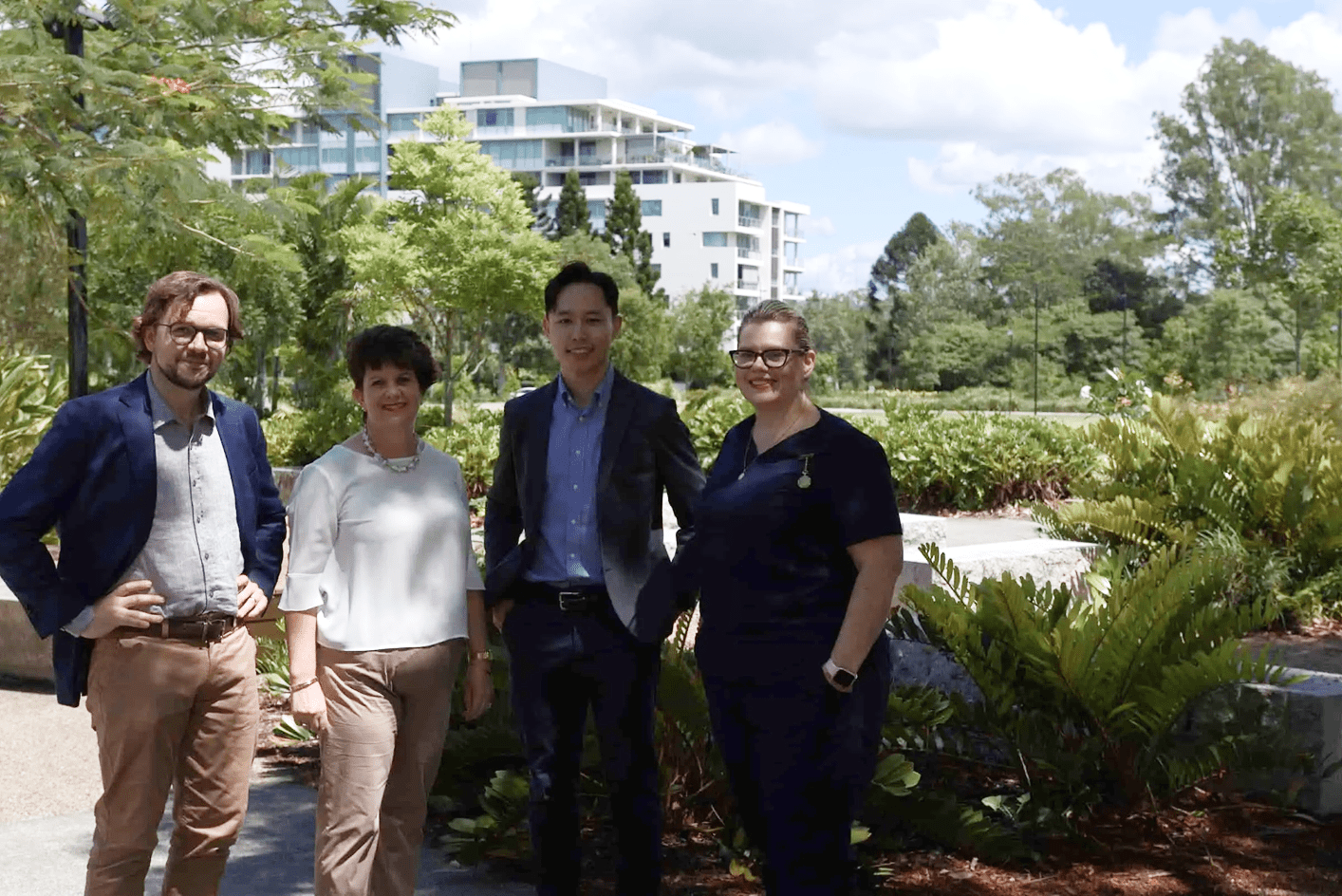
Our team recently won a Stronger Medicare Award for innovation and capacity to care for Australia’s disadvantaged and multicultural communities. A national award at dinner with the PM? Not bad!
But this isn’t new. In 2009 and 2016 we won Practice of the Year Awards at state and national levels. The detail of our work—our systems, notes, infection control, all the processes that keep you safe—hit the mark. Then we demonstrated how much more we do beyond the basics.
When our CEO received the Australian Primary Care Nurses Association President’s Award in 2025, we all smiled. Her legacy is our work: team-based care, time with patients before profits, ensuring our entire team works to their strengths, and speaking out about what needs changing. Two national awards in 12 months. We’re not done yet.
Philanthropy
Innovation doesn’t fund itself. Medicare covers standard care, but testing new models, piloting technology, and proving what works requires different investment.
We’ve built our reputation on turning ideas into reality. Software businesses that serve practices across Australia. Australia’s first national health record upload. Models that bring hospital specialists into community settings. Each started as a question about better care, then required years of partnership, testing, and refinement.
Current projects include healthy ageing pathways, improving patient registers and chronic disease, improving lives through social prescribing and AI-powered clinical support. We’re also collecting stories from patients who are “hard to serve”—using their experiences to train clinicians in more responsive care and making the case for additional funding in disadvantaged locations.
We’re a registered charity. Your support funds research, pilot programs, and innovations that benefit healthcare beyond our walls.
Our Key Partners
Some wise owl once said the word “team” really means, Together Everyone Achieves More. That is our team’s experience. We work together with amazing partners to deliver our mission. When nobody cares who gets the credit and the focus is solely about improving health outcomes, we can really achieve more! For now, we just want to say thanks for the advice, the access to people, the reductions in software costs and the involvement in innovation which our partners bring. We could not deliver healthcare for good without you!


